The address was scheduled for eight o’clock on a Tuesday evening in March, which struck most people as oddly mundane for what the White House had teased as “a historic announcement of unprecedented global significance.” Networks had been running countdown clocks for seventy-two hours. Speculation online had reached a kind of hysterical pitch — a cure for cancer, a third world war, an economic collapse. The betting markets had coalesced around something to do with artificial intelligence.
Nobody guessed right. Nobody could have.
Mara Okonkwo was folding laundry when the President walked to the podium. She was thirty-four, a pediatric nurse in Columbus, Ohio, single mother of two boys under ten, and she had the television on mostly for company. Her older son, Darius, was supposed to be in bed but had crept to the hallway and was watching through the banister, a habit she’d given up trying to break.
The President looked tired. Not the performance of tiredness that politicians sometimes deployed for sympathy, but genuinely, structurally exhausted, as though he had been carrying something too heavy for too long and had finally decided to set it down regardless of where it landed.
“My fellow Americans,” he began, then paused and looked up from the teleprompter. “Actually, I want to address the world tonight. Because what I have to tell you belongs to everyone.”
Mara set down a pillowcase.
He spoke for eleven minutes before the reveal. He laid the groundwork carefully — a history of contact beginning in 1947, not a crash but a landing, not an accident but an approach. He named the administrations that had known. He named the agencies. He described, in broad terms, the arrangement that had developed over the following decades: a quiet, mutual exchange of knowledge between human governments and representatives of what he called, carefully, “a non-terrestrial civilization.”
The phrase hung in the air of every living room, bar, hospital waiting area, and Times Square like a collective intake of breath.
He listed the products of that collaboration. Certain advances in fiber optic communication. Foundational work in MRI technology. Specific breakthroughs in materials science that had enabled modern solar panels. A family of antiviral compounds developed in the 1980s, credited publicly to a pharmaceutical consortium, that had quietly formed the basis of treatments saving millions of lives annually.
“These gifts,” the President said, “were not given without conditions. And the conditions — the secrecy, the control, the deliberate pacing of what was shared with the public — were imposed not only by our partners, who had their own reasons for caution, but by us. By leaders of nations who made choices about what the world was ready to know.”
He paused again, long enough that the network anchors began murmuring over him before falling silent.
“I cannot defend all of those choices. Some of them, I believe, were made in genuine good faith. Others were made to protect interests that had no business being protected. The people deserved better, and I am sorry.”
Then he turned to his left and said, simply: “Will you come forward, please.”
What walked to the podium was not what science fiction had prepared anyone for. There was no dome-shaped cranium, no enormous obsidian eyes, no gray skin. The being that stood beside the President of the United States was approximately five and a half feet tall, bilaterally symmetrical, with a slender frame and a face that was — the word everyone reached for, afterward, was almost. Almost human. The proportions were slightly wrong in ways that were difficult to articulate. The eyes were larger, amber-colored, with a pupil that adjusted visibly to the studio lighting. The skin was a pale bluish-white, faintly luminescent in the way of deep-sea creatures. It wore something that looked like a tailored suit, which later became the subject of its own considerable internet discussion.
It stood at the microphone and was quiet for a moment, and when it spoke, the voice was clear and measured and came in what appeared to be perfect English.
“My name, translated as closely as your language allows, is something like Seren. I have been stationed on Earth for nineteen of your years. I am glad to meet you.”
That was all it said.
The President thanked it, placed a hand briefly on its shoulder — a gesture so instinctively human that it made people around the world feel something complicated — and promised that more information would be forthcoming in the days ahead.
The broadcast ended.
The world did not end with it, though for a few hours, it felt as though it might.
Mara stood in her kitchen at eleven o’clock that night, unable to sleep, scrolling through her phone with the particular desperate hunger of someone trying to understand something that may simply be too large to understand all at once. Darius had come downstairs after the broadcast and sat beside her on the couch without saying anything for a very long time.
Finally he said, “Are there more of them? Like, living here?”
“I don’t know, baby.”
“Are they nice?”
She thought about this. “They helped make medicine that saves sick people. So probably.”
He seemed to accept this with the economy of judgment that children sometimes possess. “Okay,” he said, and went to bed.
Mara stayed up until two. By then, the broad shape of human reaction was already becoming visible online, the way a weather system becomes visible from space — several distinct formations, each with its own internal logic, moving in different directions.
The Accommodators — nobody called them that at first, but the name stuck — were people who absorbed the news and then, almost immediately, began adjusting. They were represented across demographics in ways that surprised sociologists who later studied them: young and old, urban and rural, religious and secular. What they seemed to share was a particular relationship with uncertainty — a comfort with not knowing that translated, when confronted with the genuinely unknown, into flexibility rather than fracture.
Within weeks, Seren and the small cohort of non-terrestrial individuals who were gradually introduced to the public had become a fixture of mainstream media. A non-terrestrial ambassador gave an interview to a morning news program and expressed, with evident sincerity, a fondness for recorded jazz music. Seren published a written statement about environmental policy that was, by any measure, more sophisticated than most human analysis on the subject. A child in Phoenix drew a picture of her alien neighbor, who had apparently been living three houses down for eleven years, helping with her homework, and the drawing went around the world.
The accommodators treated this as a beginning. They showed up at town halls, demanded the release of suppressed technologies, petitioned universities to establish joint research programs, organized welcome committees with a kind of earnest civic energy that was easy to mock and hard to dismiss.
Mara became, without entirely planning to, one of them. She started attending meetings at a community center in her neighborhood. She brought Darius, who began asking Seren — who appeared, over time, more and more in public life — questions through an online forum the government set up for public engagement. Seren answered them with a patience that struck her as either very alien or very parental, and she wasn’t sure there was a difference.
The Shaken were harder to categorize. They were not hostile, not welcoming, but fundamentally destabilized. Among them were millions of deeply religious people for whom the revelation didn’t destroy faith so much as demand that it be rebuilt from different materials.
Father Thomas Anselm, a Catholic priest in rural Pennsylvania, did not leave his vocation. But he spent three months barely leaving his rectory, rereading everything he had ever read with what he described to his bishop as “new and uncomfortable eyes.” He emerged in June with a sermon that was recorded by a parishioner and watched seventeen million times.
“We have always known that creation is larger than our imagination of it,” he said. “We have simply been reminded, in a rather dramatic fashion, that this is true. The question before us is not whether God could have created other minds in other places. The question is whether we are large enough, in our love and our humility, to recognize the image of creation even where it does not look like us.”
It was not a perfect answer. It satisfied no one entirely, including Father Anselm. But it opened a door that many people walked through rather than standing in the rubble of the frame.
The Shaken renegotiated. They rebuilt. Many came out the other side with something quieter and stranger and more durable than what they’d had before. Some didn’t, and those losses were real and should not be minimized. There were spikes in mental health crises in the months following the disclosure, and the therapists and counselors and community organizations that absorbed them did work that deserved far more recognition than it received.
What the Shaken ultimately contributed was an insistence on meaning. If the world was larger than anyone had thought, then meaning itself needed to be renegotiated, not abandoned. That argument — made in congregations and community centers, in philosophy departments and kitchen tables, in grief support groups that had organically pivoted to existential support groups — was one of the stranger and more important cultural forces of the period.
The Furious organized fastest.
They coalesced first on the internet and then in the streets, and their rage was not without legitimate foundation. The suppressed technologies alone were enough to justify a profound and generational anger. An energy storage system derived from non-terrestrial materials science, capable of revolutionizing grid power storage, had apparently been in limited classified development since 1991. A water purification method had been quietly shelved because of the effect its mass implementation would have had on the global infrastructure economy. Antibiotic compounds that could have addressed the emerging resistance crisis two decades earlier had been rate-limited through the patent system.
These were not small things. These were the lives of people who had died waiting. These were the childhoods of people who had grown up in poverty that different energy economics might have alleviated. The fury was rational and it was warranted, and it became, for a time, the dominant political force of the moment.
The problem was what the fury did next.
Some of it stayed focused — on accountability, on the release of technology, on legal frameworks for the individuals and corporations and agencies responsible for the suppression. There were congressional hearings, lawsuits, international tribunals. Some executives who had been involved in the coordination went to prison. More didn’t, which sustained the anger, as injustice tends to do.
But some of the fury metastasized. It turned inward on itself, became certain of a conspiracy so total and so corrupt that no institution could be trusted, no authority consulted, no cooperation extended. And where that certainty met the aliens — the very beings who had shared the knowledge that had then been weaponized by human greed — it turned outward with catastrophic results.
The Eliminationists were a small minority. Polls taken six months after the disclosure never put them above four percent of the global population, which sounds like a small number until you do the math and realize that four percent of eight billion is three hundred and twenty million people.
Not all of them were violent. The majority expressed their views through rhetoric — through a conviction that the non-terrestrial presence on Earth represented an existential threat that the governments of the world were either too corrupted or too naive to recognize. They pointed to the secrecy itself as evidence of malign intent: if the aliens had been truly benevolent, why require concealment? The answer — that the concealment had been largely a human choice, made for human reasons — did not penetrate.
But some were violent. In the eight months following the disclosure, there were forty-three attacks on non-terrestrial individuals or locations associated with them. The non-terrestrial community responded to each one with a restraint that was total and absolute. They did not retaliate. They did not withdraw. They issued statements expressing something that translated, in the consensus of linguists and diplomats, as sadness rather than anger — a distinction that seemed important to them.
Seren was asked, at a press conference, whether the non-terrestrial community would consider leaving if the violence continued.
“We have been here for seventy-eight years,” Seren said. “We have watched your children grow up. We have mourned with you and we have built with you. We are not leaving. We hope, in time, to be trusted. We understand that trust, once broken by those who held it, is not easily restored. We will wait.”
The statement was widely circulated. Among the eliminationists, it was cited as evidence of infiltration and manipulation. Among the accommodators, it was printed on signs and carried through streets. Among the shaken and the furious, it was read and reread and argued over in ways that did not resolve cleanly into either comfort or rejection.
The turn came, as such turns often do, not through a single dramatic moment but through an accumulation of smaller ones.
A twelve-year-old girl in Lagos was dying of a rare autoimmune condition. Her doctors had exhausted every available protocol. A non-terrestrial medical liaison — one of thirty stationed at major international hospitals as part of a nascent exchange program — offered a treatment that had been developed collaboratively decades earlier and never released. The girl recovered in eleven days. Her mother held a press conference. She did not talk about politics or conspiracies or the failures of governments. She talked about her daughter running in the garden.
A farmer in rural Kansas, who had been part of a loosely organized eliminationist group, attended a town meeting where Seren was scheduled to speak. He went, he later said, with the intention of asking aggressive questions. He ended up staying four hours. He described it afterward not as a conversion experience but as something simpler: he had expected the alien to be evasive and defensive, and instead it had been direct. It had acknowledged that the concealment had caused harm. It had said, without apparent calculation, that human anger was understandable, because human suffering was real, and it had been real in part because of decisions made within a framework it had participated in. “I am not without responsibility,” Seren said, “for agreeing to conditions that I believed would change faster than they did.”
The farmer drove home, sat in his truck in his driveway for a long time, and then went inside and made a phone call that ended his membership in the group.
These were not the stories that dominated the news cycle. The violence did, the political chaos did, the international negotiations and the legal battles and the spectacular failures and occasional triumphs of the accountability movement. But the smaller stories accumulated quietly, the way water accumulates in an aquifer, and eventually they began to change the pressure beneath the surface.
By the end of the first year, three countries had formally signed cooperative technology agreements with the non-terrestrial delegation. The energy storage technology was in the first stages of public development. The water purification method was being piloted in seven countries, in communities that had been waiting decades for clean water, and the results were immediate and irrefutable and quietly devastating in what they implied about how long the wait had been.
The accountability movement had won some fights and lost others and was learning, with difficulty, the difference between justice and revenge, between systemic change and the satisfaction of seeing specific people punished. It was a lesson that political movements often have to learn through grief, and this one was learning it in real time, in public, in the aftermath of a disclosure that had reorganized the moral landscape of the world.
The eliminationist violence decreased. Not because the ideology dissolved — it didn’t; it went underground and became harder to see and therefore harder to address — but because its practical support had eroded. People who had been sympathetic in the abstract became less so when they saw, in concrete terms, what the aliens were and were not. They were not colonizers. They were not preparing an invasion behind a diplomatic façade. They were, by every observable measure, doing exactly what they had always done: working, quietly and persistently, on problems that human civilization had not been able to solve alone.
Whether that restraint reflected the full truth of the non-terrestrial civilization’s relationship with Earth, or whether it reflected a more complex picture that had not yet become visible, was a question that thoughtful people debated and continued to debate. The aliens had their own history, their own politics, their own reasons for making the choices they had made. Not everything was answered. Not everything would be, perhaps for generations.
Mara, two years after the broadcast, was working on a health equity task force that had been established to address disparities in access to the newly released treatments. She worked alongside a non-terrestrial medical liaison named something that sounded approximately like Vel, who was meticulous and occasionally funny and had a habit of asking questions about human food that were endearing and slightly absurd. She brought Darius to the office sometimes. He was twelve now and deeply interested in materials science, a field that was experiencing a renaissance so rapid that universities were scrambling to redesign their curricula around it.
He asked Vel, one afternoon, what his home was like.
Vel described it for nearly twenty minutes, with a specificity and affection that surprised them both. Mara noticed that it spoke about home in the past tense, with something in its voice — the nearest approximation she could find was wistfulness — that was so fundamentally recognizable that it made her chest tight.
“Do you miss it?” Darius asked.
“Yes,” Vel said. “But I am also here. Both things are true.”
Darius nodded, with the gravity of someone turning this over seriously. “That’s kind of how I feel about my dad’s house,” he said, “versus our house. Like both are real but I live in this one.”
Vel was quiet for a moment.
“Yes,” it said. “That is exactly it.”
Father Anselm gave another sermon, three years after the first. It was less watched — the world had moved on to other urgencies, as worlds do — but it was, Mara thought, the better of the two. He talked about what it meant to live in a story that was larger than the one you had been given. He talked about how every generation believed, more or less, that it was living at the hinge of history — that its moment was the decisive one, the one that would determine everything that followed. And he talked about how this feeling was simultaneously grandiose and correct: every moment is the hinge, because every moment is where the choices get made.
“We have been given something rare,” he said. “Not an answer. We have been given a larger question. And that is not a small thing. That is the whole project.”
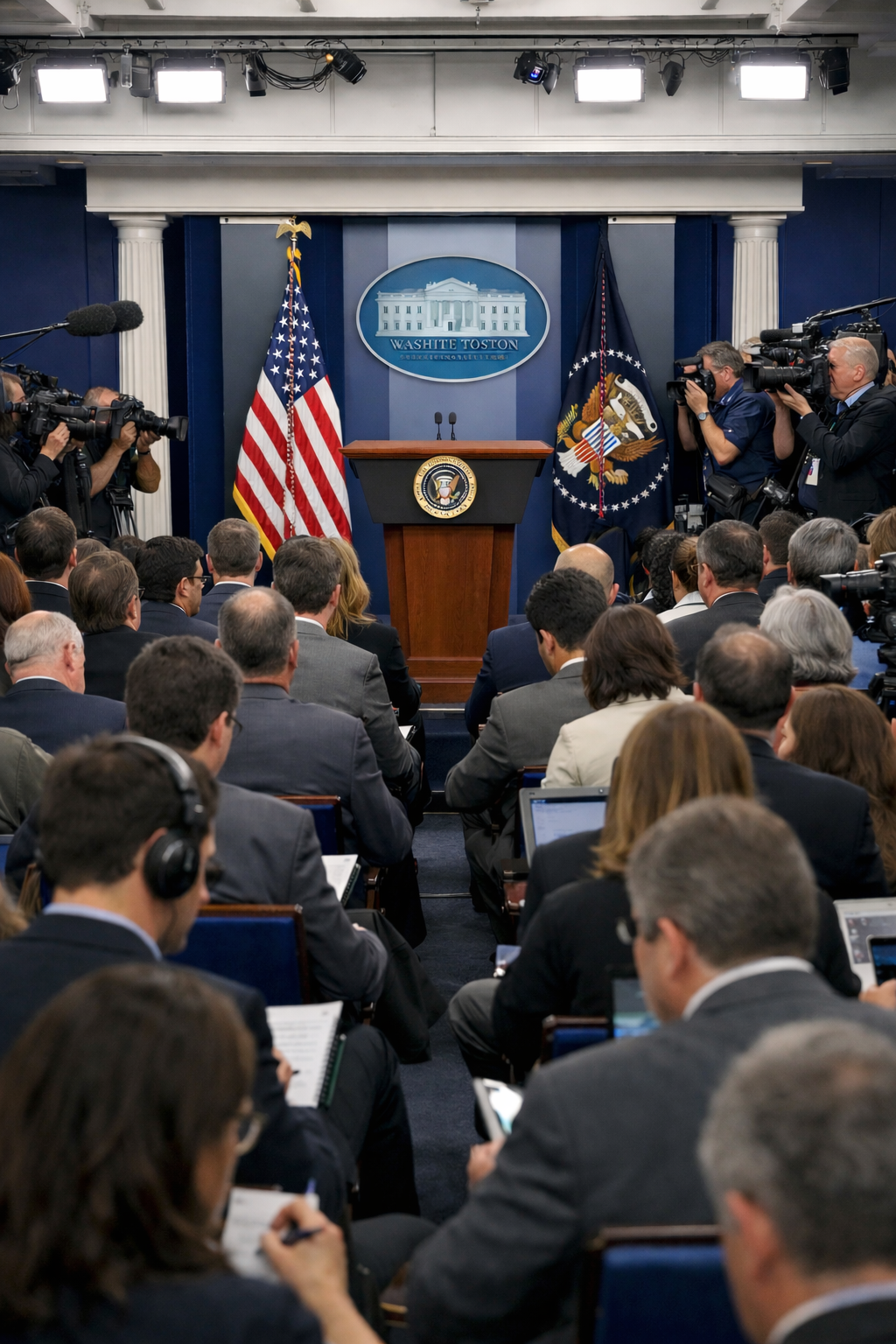
A few months later the President scheduled an address for the upcoming Thursday evening at 6:45 p.m., ensuring its coverage would be carried live on the nightly news broadcasts.
The President approached the lecturn, slowly, with the look of a man exhausted from carrying too many worries for far too long. Not unlike his appearance three and a half years ago when he first revealed what had been kept secret for decades.
The room quieted as he positioned himself at the podium, his right hand at his side, his left gripping the platform tightly.
A few seconds passed as he stared into the camera as if he were unsure how to proceed. A glance down accompanied by a clearing of the throat, and he began, “My fellow Americans and people across Earth, I am sorry.”
The movement of his right arm coincided with his final word, pulling from his waistband a Sig Sauer 9mm pistol which he positioned to his right temple and pulled the trigger.
The camera remained on long enough to capture the final seconds of the President’s life before its feed was cut.
On the fourth anniversary of the disclosure, a survey was conducted in forty-two countries asking simply: are you glad you know? The results were, depending on your disposition, either encouraging or merely interesting: seventy-one percent said yes. Eighteen percent said they weren’t sure. Eleven percent said no.
Seren, asked for a response to the survey, was quiet for a moment and then said: “Seventy-one percent is better than we feared.”
When asked what percentage they had hoped for, Seren said: “All of them. But we are patient. We have been here a long time.”